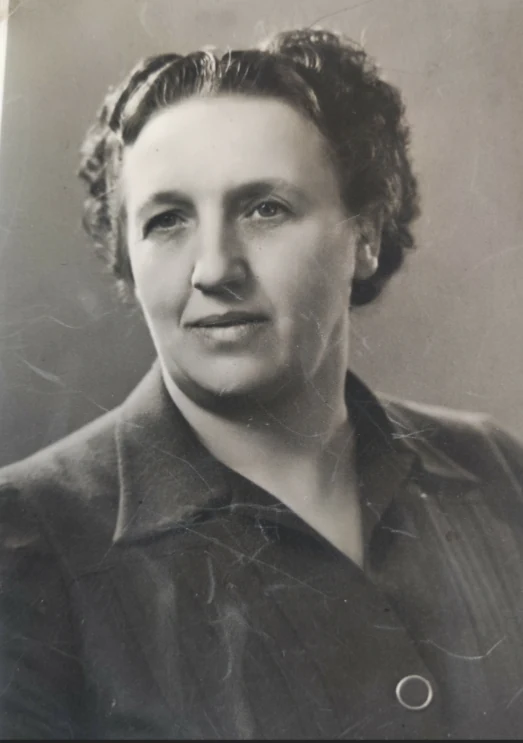
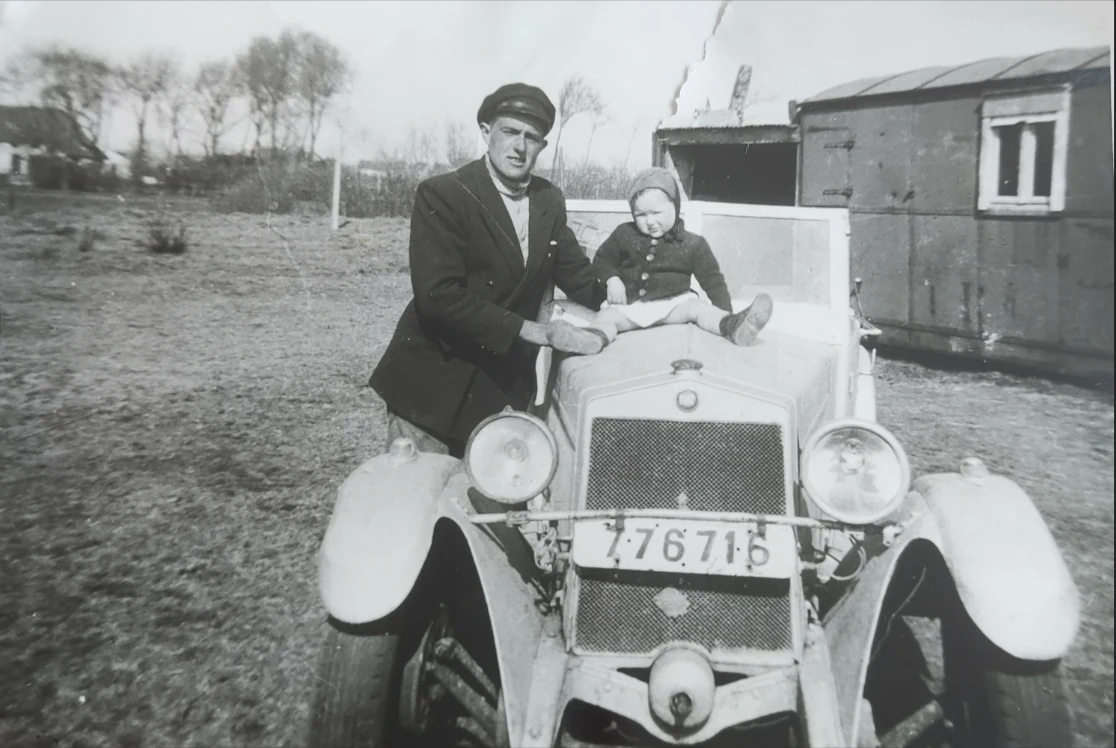
Jeanne nous regarde sans que la photographie dise quand elle a été prise. Son visage est net ; son parcours l’est moins. Entre Nieuwpoort, la Bourgogne et la côte belge, sa vie traverse deux guerres, un déplacement familial, deux mariages et un deuil brutal. Pour la raconter honnêtement, il faut accepter que certaines pièces parlent fort et que d’autres manquent encore.
Une fille de la côte et d’une famille venue de l’Amblève
La date de travail la plus solide situe la naissance de Jeanne Hortensia Lexhardé le 6 septembre 1907 à Nieuwpoort. Elle est donnée comme fille d’Émile Joseph Lexhardé, originaire d’Aywaille, et d’Elisa Maria Mortier, née à Oostduinkerke. Les compilations familiales présentent Émile comme journalier puis tailleur de pierres, et Elisa comme ouvrière ou domestique. Leur mariage est placé au 14 août 1903 à Nieuwpoort.
Ces renseignements convergent dans Patronomia et plusieurs arbres, mais les actes originaux ne sont pas encore joints au dossier. Ils restent donc de niveau C. Une ancienne version faisait naître Jeanne le 15 octobre 1907 à Aywaille ; elle est conservée comme erreur corrigée afin qu’elle ne redevienne pas, un jour, une seconde vérité.
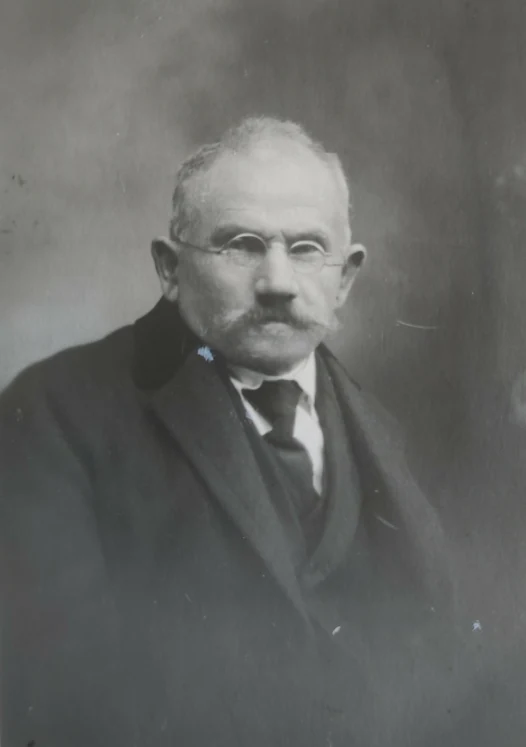
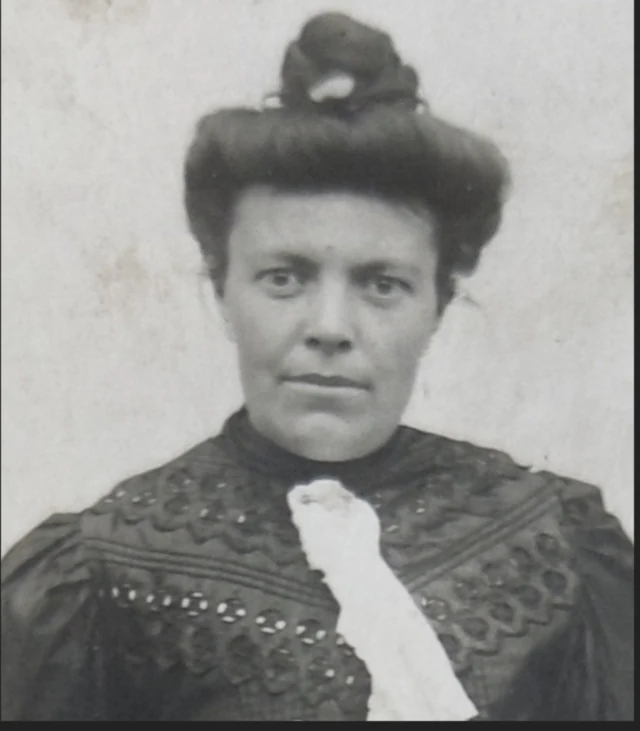
1914 : quitter Nieuwpoort
À l’automne 1914, Nieuwpoort devient l’un des points décisifs du front de l’Yser. La ville est détruite et la plaine est volontairement inondée à partir de la fin octobre pour arrêter l’avancée allemande. Les habitants de Nieuwpoort, Ramskapelle et Sint-Joris sont déplacés et prennent la fuite. Jeanne a alors sept ans.
Deux occurrences du nom Lexhardé apparaissent à Pouillenay, en Côte-d’Or. Germaine Albertine Rachel Lexhardé y est donnée née le 28 février 1916, et Marguerite Sophie en 1918. Ces naissances rendent le séjour d’Émile et Elisa en Bourgogne très probable. Elles ne prouvent pas encore, à elles seules, que Jeanne les accompagnait, ni le statut administratif exact de la famille.
Le retour, Aimé et le foyer Deman
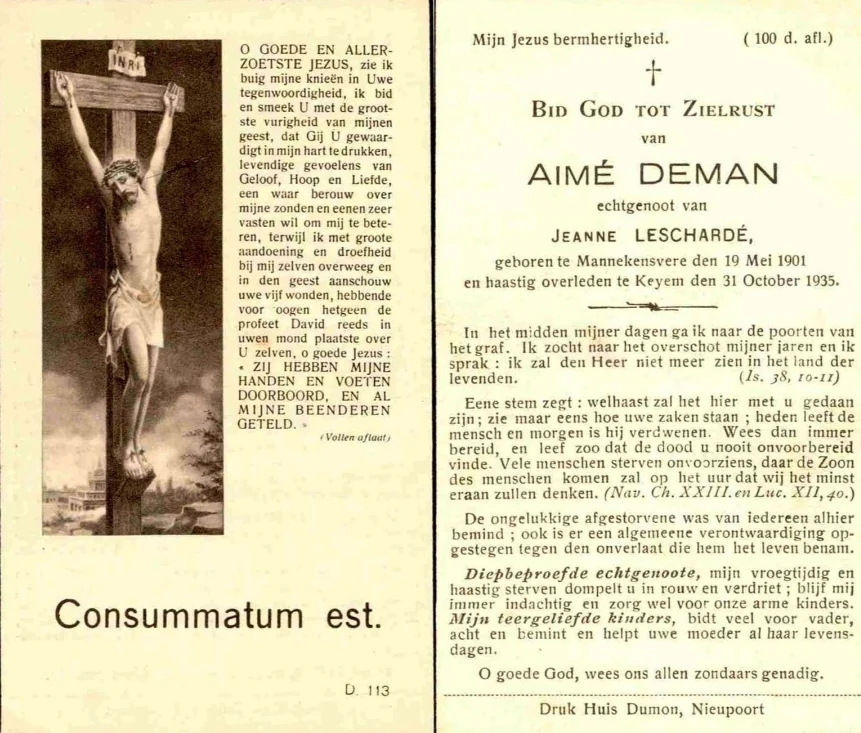
Après la guerre, la famille revient en Belgique à une date qui reste à préciser. La compilation situe le mariage de Jeanne avec Aimé Constantinus Joannes Deman au 15 août 1926 à Nieuwpoort. La carte mortuaire d’Aimé confirme qu’il était né à Mannekensvere le 19 mai 1901 et qu’il était l’époux de Jeanne Leschardé, variante flamande du nom Lexhardé.
Odette, Georgette et Anita sont actuellement nommées comme enfants du couple. Le total demeure incertain : les arbres, récits et même la presse ne s’accordent pas. L’article ne fixe donc aucun nombre définitif. Les registres de population et les actes de naissance devront reconstituer le ménage, enfant par enfant.
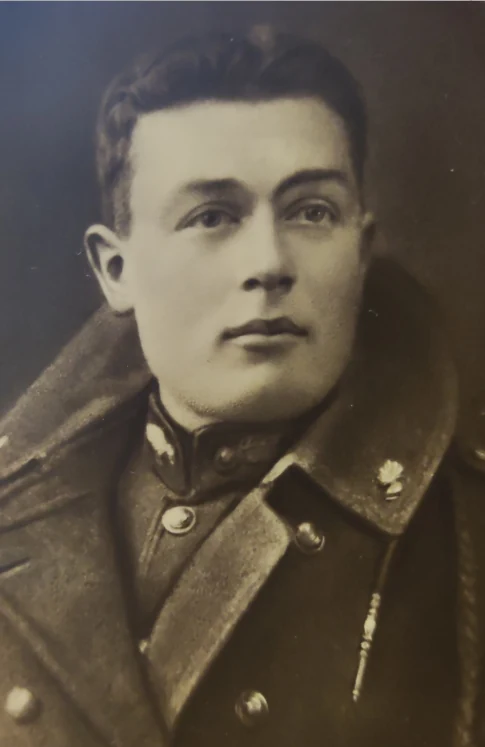
31 octobre 1935 : ce que les coupures établissent
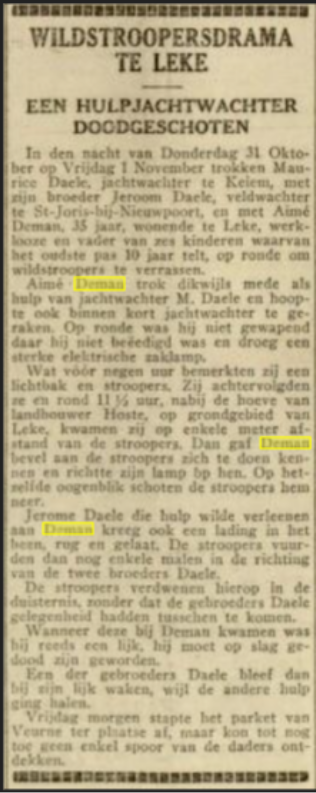
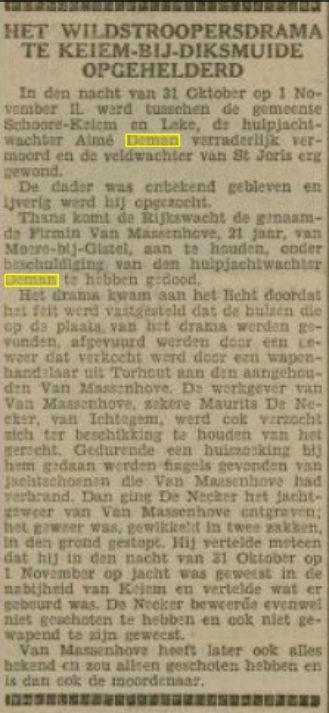
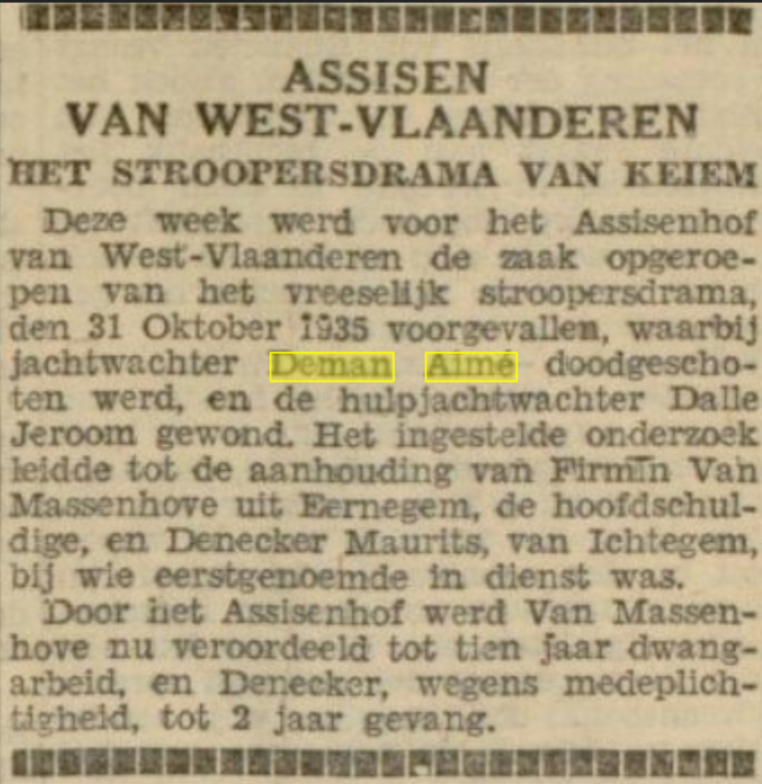
La mémoire familiale racontait qu’Aimé, garde-chasse, avait été abattu par des braconniers. Trois coupures de presse authentifiées par Johnny permettent désormais de dépasser la seule tradition orale. Elles présentent Aimé comme auxiliaire garde-chasse et rapportent qu’il fut tué lors d’une confrontation nocturne près de Keiem. Jeroom Daele, qui l’accompagnait, fut blessé.
Les articles nomment Firmin Van Massenhove comme auteur du tir mortel et Maurits Denecker comme complice. Le compte rendu des assises de Flandre occidentale annonce une condamnation de Van Massenhove à dix ans de travaux forcés et de Denecker à deux ans de prison. Les titres des journaux et leurs dates exactes de parution restent à retrouver.
Une coupure donne Aimé âgé de 35 ans et père de six enfants. Né le 19 mai 1901, il avait 34 ans au moment des faits ; seuls trois enfants sont actuellement nommés et les autres sources donnent encore d’autres totaux. La presse documente solidement le drame, mais ne remplace pas l’état civil pour chaque détail.
Veuve, puis épouse de Michel Marcel Borny
Jeanne se retrouve veuve à vingt-huit ans. Une tradition familiale rapporte qu’elle aurait écrit à la reine pour demander la grâce du meurtrier de son mari. Cette lettre n’est pas conservée dans le dossier et demeure un témoignage à rechercher dans les archives judiciaires ou royales.
La compilation situe son remariage avec Michel Marcel Léopold Borny au 19 février 1939 à Mannekensvere. Jeanne aurait vécu jusqu’au 1er octobre 1989, date donnée pour son décès à Oostende. Entre ces deux dates, cinquante années restent encore presque silencieuses dans notre documentation.
Une histoire que les documents continuent d’écrire
Jeanne n’est pas seulement l’épouse d’un homme dont la mort fit la une. Elle fut d’abord une enfant de Nieuwpoort, probablement déplacée par la guerre, puis une femme revenue sur la côte, mère d’un foyer dont la composition reste à reconstituer, veuve et enfin membre d’une famille recomposée.
Les portraits lui rendent un visage ; les coupures rendent à Aimé son histoire ; les actes encore manquants devront rendre à Jeanne les étapes précises de la sienne. C’est la limite et la force de cet article : raconter ce qui tient déjà, sans faire parler les silences à sa place.