Des lieux à regarder, des noms à retrouver, une histoire à transmettre.
Arbre de travail : le raccord biologique de 1658 reste contesté. 1658 ↓
1. Des fermes qui rendent les noms plus proches
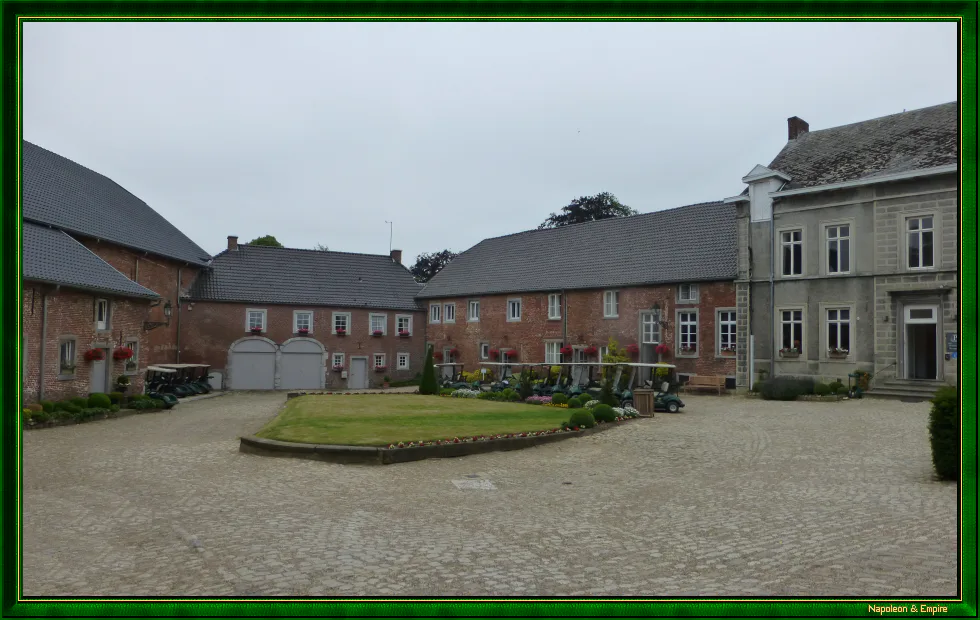
Un nom dans un arbre peut tenir sur une ligne. Une ferme nous invite à regarder plus longtemps. Derrière le mot « censier », il y a une exploitation, des terres à cultiver, un bail à tenir et une famille dont les liens se retrouvent parfois dans les contrats. Dans le pays de Nivelles, les lignées Semal et Wauthy ouvrent ainsi un chemin entre plusieurs lieux : Hulencourt, Monstreux, Grand Pierpont, Houtain et Rèves. C’est ce chemin que nous allons suivre, jusqu’à la branche maternelle de la famille Deman. R1
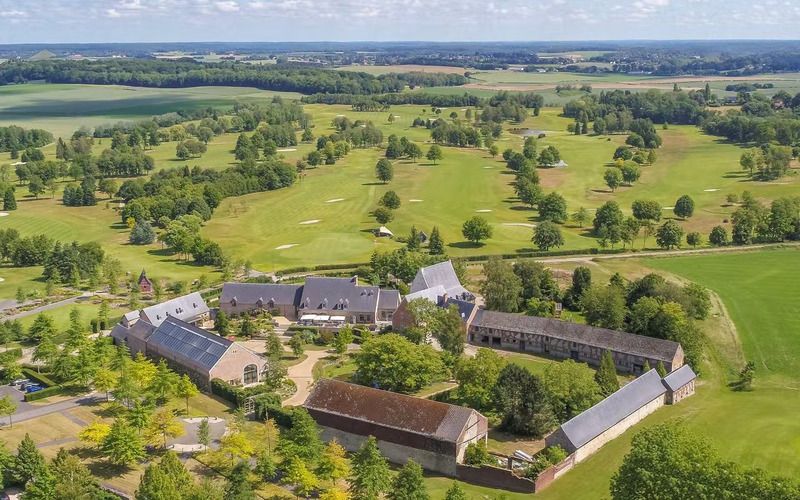
La photographie d’ouverture montre les bâtiments d’Hulencourt dans leur paysage actuel, vus du ciel. Transmise par Johnny, elle rapproche la ferme et les terres aujourd’hui aménagées en golf ; sa date et son photographe restent à préciser. Cette distance entre ce que l’on voit et ce que l’on cherche est au cœur de l’enquête : un lieu peut demeurer, tandis que ses bâtiments, ses limites et ses usages changent. Retrouver un domaine ne suffit donc pas à retrouver la maison précise d’une personne. M4
Le titre parle de lignées : il ne certifie pas une ascendance biologique complète. Le raccord entre Pierre-Philippe Wauthy et Armand, vers 1658, reste contesté. Les fermes et les familles anciennes appartiennent à l’arbre de travail ; leur rattachement aux descendants d’Armand dépend encore de ce maillon. Cette réserve accompagne notre promenade, sans en effacer l’intérêt. R2
Carte de repérage
2. Les Semal : de Hulencourt à Grand Pierpont
Le dossier familial, reprenant une édition de Patronomia de 2025, donne Phillipart Semal de Pécron, né vers 1470, comme censier à Hulencourt et à la Grande Cense de Monstreux. Il lui attribue un fils, Denys Marcel Semal de Pécron, lui-même associé à Monstreux en 1534. Ces indications dessinent une première continuité, mais elles restent des données de compilation : aucun bail original n’a été obtenu pour certifier ces occupations. R1
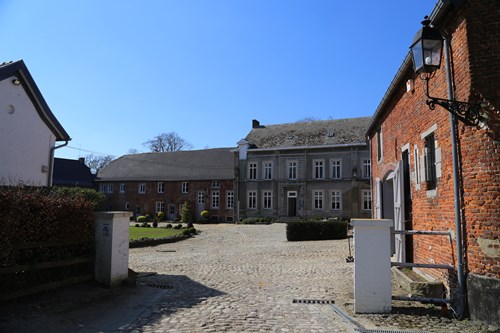
À Hulencourt, la notice patrimoniale signale un porche daté de 1680. Il est donc postérieur aux premières générations évoquées ici. Le dossier rattache le domaine à l’abbaye d’Affligem, qui revient aussi dans l’histoire de Pierpont. Il faut regarder ces lieux comme des ensembles transformés au fil des siècles, et éviter de faire parler toutes leurs pierres d’une seule époque. R1 S04
À Monstreux, une autre prudence s’impose. La Ferme de l’Abbaye est connue dans l’histoire locale, mais son identité avec la « Grande Cense » attribuée à Phillipart n’est pas démontrée. Le nom du village constitue un repère ; il ne donne pas encore une adresse certaine. Un bail décrivant les terres, les voisins ou les confronts pourrait permettre de résoudre cette question. R1
Avec Étienne Semal, puis André, également appelé Adrien, le parcours mène au Grand Pierpont, à Frasnes-lez-Gosselies. Un contrat de mariage de janvier 1597 est signalé dans l’étude Meurs ; l’original reste à obtenir. Il offre surtout une piste vers les transmissions et les alliances qui entouraient l’exploitation. La recherche gagne ici un objectif concret : retrouver le document, sa cote et ses mots exacts. R1 S03
Les naissances estimées et les prénoms variables empêchent de traiter cette succession comme une série d’actes déjà vérifiés. Pour André ou Adrien, notamment, les dates rapportées ne concordent pas entièrement. Mieux vaut conserver ces variantes que choisir une précision séduisante. Le premier arbre montre donc une chaîne de travail, et non un certificat de filiation. R1

3. Une cense, bien plus qu’une maison
Une cense est une exploitation agricole. Le censier ou la censière en assure l’exploitation, sans être nécessairement propriétaire du sol. Dans le corpus réuni, les fermes, les terres, les droits et les détenteurs de ces droits doivent être suivis séparément. Le nom d’une famille associé à une ferme ne signifie pas que tout le domaine lui appartenait, ni qu’il lui a été transmis de génération en génération. R1
Le bail est donc une pièce essentielle. C’est lui que l’on voudrait lire pour connaître le preneur, les obligations, la durée et les biens concernés. Une notice généalogique peut donner une profession ; un contrat permettrait de comprendre ce que cette profession représentait dans un lieu et à une date. Les comptes, inventaires et successions pourraient ensuite compléter l’image, sans que nous disposions déjà de toutes ces pièces. R1
Il faut aussi résister au prestige des grandes superficies. Le dossier cite des bonniers, une ancienne mesure dont la valeur dépend des usages locaux. Nous conservons cette unité sans la convertir automatiquement en hectares. Deux chiffres relevés à des époques différentes peuvent concerner des limites différentes ; ils ne permettent pas, à eux seuls, de calculer la fortune d’un ménage. R1
Une responsabilité locale demande la même attention. Le mayeur n’est pas simplement un maire d’aujourd’hui : ses pouvoirs dépendent de l’époque et de la juridiction. Être présenté comme censier et mayeur situe une personne dans un milieu de responsabilités, mais n’établit ni noblesse héréditaire ni richesse constante. Chaque fonction doit rester attachée à celui qui l’exerce et à la source qui la rapporte. R1 R2
Cette manière de lire rend l’histoire plus proche. On ne cherche pas un décor de prestige, mais les conditions dans lesquelles des familles exploitaient les terres, s’alliaient et transmettaient des droits. Les documents manquants deviennent alors des questions précises : qui tenait le bail ? Qu’est-ce qui passait lors d’un mariage ? Quels biens appartenaient au couple, et lesquels étaient seulement exploités ?


4. Des femmes présentes dans les transmissions
Isabeau Malréchauffé, Charlotte Semal et Marie Nopère ne doivent pas disparaître derrière les prénoms de leurs époux. Le corpus les associe aux exploitations et au vocabulaire des censières. Ces mentions sont encore inégalement documentées, mais elles suffisent à leur donner une place dans la recherche économique et familiale. Leur rôle ne se résume pas à relier deux cases d’un arbre. R1
Isabeau est présentée comme l’épouse d’André ou Adrien Semal dans le dossier de Pierpont. Des testaments datés de 1643 et 1645 sont signalés parmi les pistes documentaires. Leur lecture permettrait de vérifier les personnes nommées, les biens et les dispositions retenues. Nous n’en déduisons pas aujourd’hui une répartition précise de l’exploitation ou une biographie que les pièces disponibles ne livrent pas. R1
Charlotte Semal est associée dans l’arbre au Double Escot et à Jean II Wauthy. Marie Nopère apparaît, dans la compilation reprise par le dossier, comme censière à Houtain-le-Mont en 1639. Pour chacune, la bonne démarche est de retrouver la mention complète, puis les baux, contrats ou successions qui pourraient préciser son activité. Un même mot professionnel ne garantit pas que les situations étaient identiques. R1
Ces femmes peuvent ainsi entrer dans le récit par leurs noms et leurs fonctions rapportées, sans scène inventée. Nous ne savons pas quelles conversations ont accompagné les décisions familiales, ni ce qu’elles pensaient de leur avenir. Nous pouvons en revanche laisser les archives ouvertes à leurs signatures, à leurs biens et à leurs choix lorsqu’un document les fera apparaître.
Arbre A · Deux lignées, un point de rencontre
Les traits continus suivent l’arbre de travail et ne valent pas acte consulté. Les dates anciennes sont celles du dossier, avec leurs réserves. Sources : R1–R3.
Semal de Pécron
- Phillipart Semal de Pécron≈ 1470 · Hulencourt · MonstreuxC
- Denys Marcel Semal de Pécron1534 · MonstreuxC
- Étienne Semal≈ 1535 – < 1597 · Grand PierpontC
- André / Adrien Semal≈ 1565/1569 – > 13.03.1645 · Grand PierpontC
Waultier / Wauthy
- Bertrand / Bertran Waultier≈ 1470 · WitterzéeC
- Henri le Vieil Waultier≈ 1500 · WitterzéeC
- Henri le Jeune Waultier≈ 1545 · Liberchies · La HoussièreC
- Jean Ier Waultier / Wauthy≈ 1570 · Houtain-le-MontC
Jonction proposée vers 1630 · B/C
Charlotte retenue dans l’arbre ; variante Jeanne-Marie chez Braive, à résoudre par les actes.
↓ Descendance proposée · C
Isabeau Malréchauffé + André / Adrien Semal · Marie Marguerite Nopère + Jean Ier Waultier / Wauthy — Couple rapporté par le corpus.
Lecture textuelle des relations
Phillipart Semal de Pécron → Denys Marcel Semal de Pécron → Étienne Semal → André / Adrien Semal → Charlotte Semal ; Bertrand / Bertran Waultier → Henri le Vieil Waultier → Henri le Jeune Waultier → Jean Ier Waultier / Wauthy → Jean II Wauthy. Charlotte + Jean II → Pierre-Philippe. Pierre-Philippe ⇢ Armand : Paternité contestée · minute et baptême à retrouver.
5. Houtain et Rèves : suivre les noms sans les confondre
La jonction proposée entre les deux lignées se situe vers 1630, autour de Charlotte Semal et Jean II Wauthy. Le couple conduit le récit vers Houtain et Rèves. Mais « Houtain » ne suffit pas toujours : Houtain-le-Mont et Houtain-le-Val doivent rester distingués, de même que Jean Ier, Jean II et Jean III. Une charge ou une exploitation attribuée à l’un ne doit pas passer automatiquement à l’autre. R1 R2
Le dossier maître, suivant Gaston Braive, associe Jean II à la Basse-Cour d’Houtain-le-Mont, au Luthéal à Rèves et au Double Escot. Il rapporte son activité au Luthéal dès 1642 et ses fonctions de mayeur de Rèves entre 1652 et 1660. Ces repères proviennent d’une source secondaire ; les baux restent à rechercher pour documenter les tenures elles-mêmes. R2
Le nom Semal porte aussi une difficulté. Charlotte est retenue dans le schéma de travail, tandis que le dictionnaire présente des formulations divergentes autour de Jeanne-Marie et Charlotte. Nous ne les corrigeons pas silencieusement et ne créons pas deux personnes certaines pour résoudre le problème. Les actes devront permettre de distinguer une erreur de rédaction, une confusion ou des identités différentes. R2
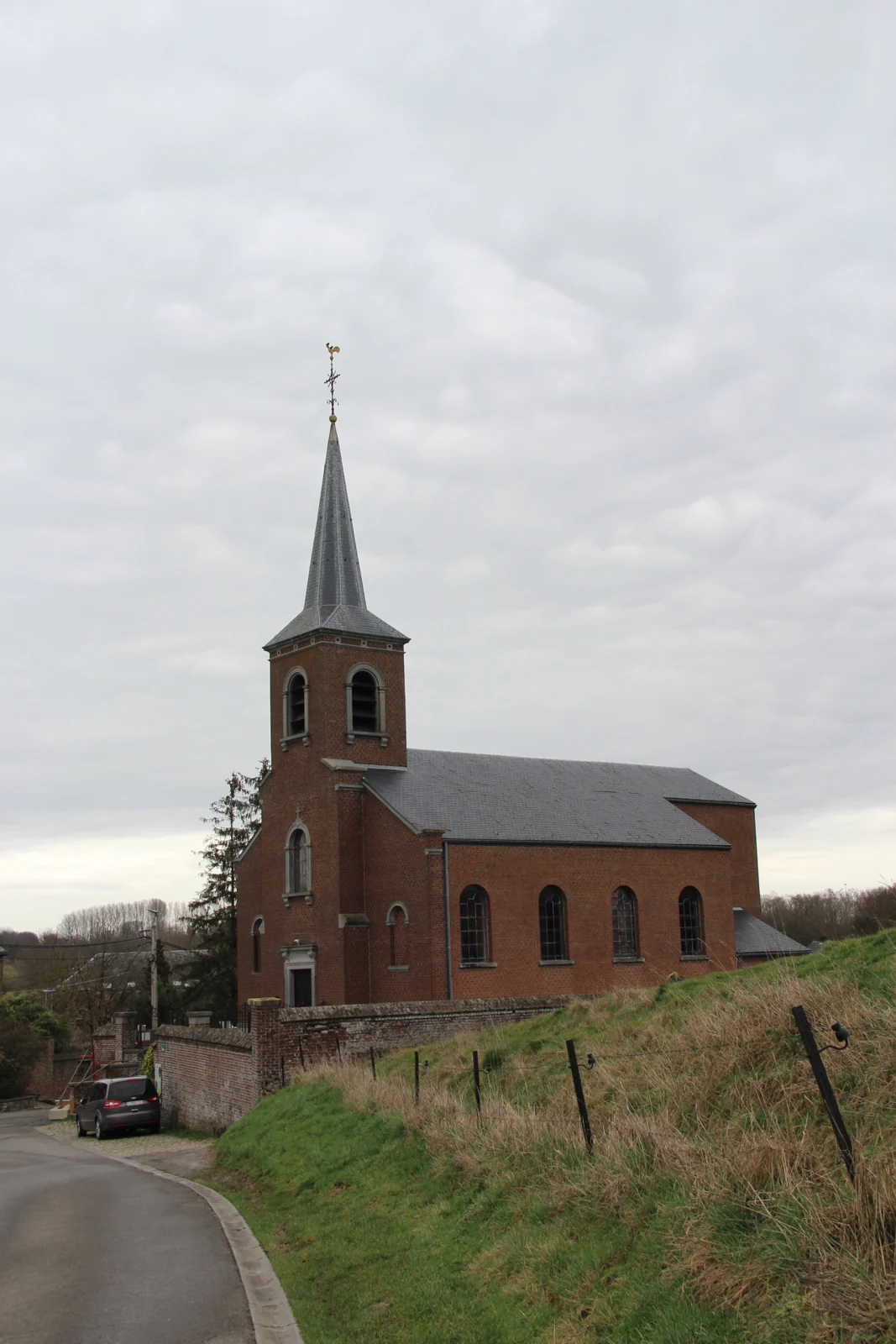
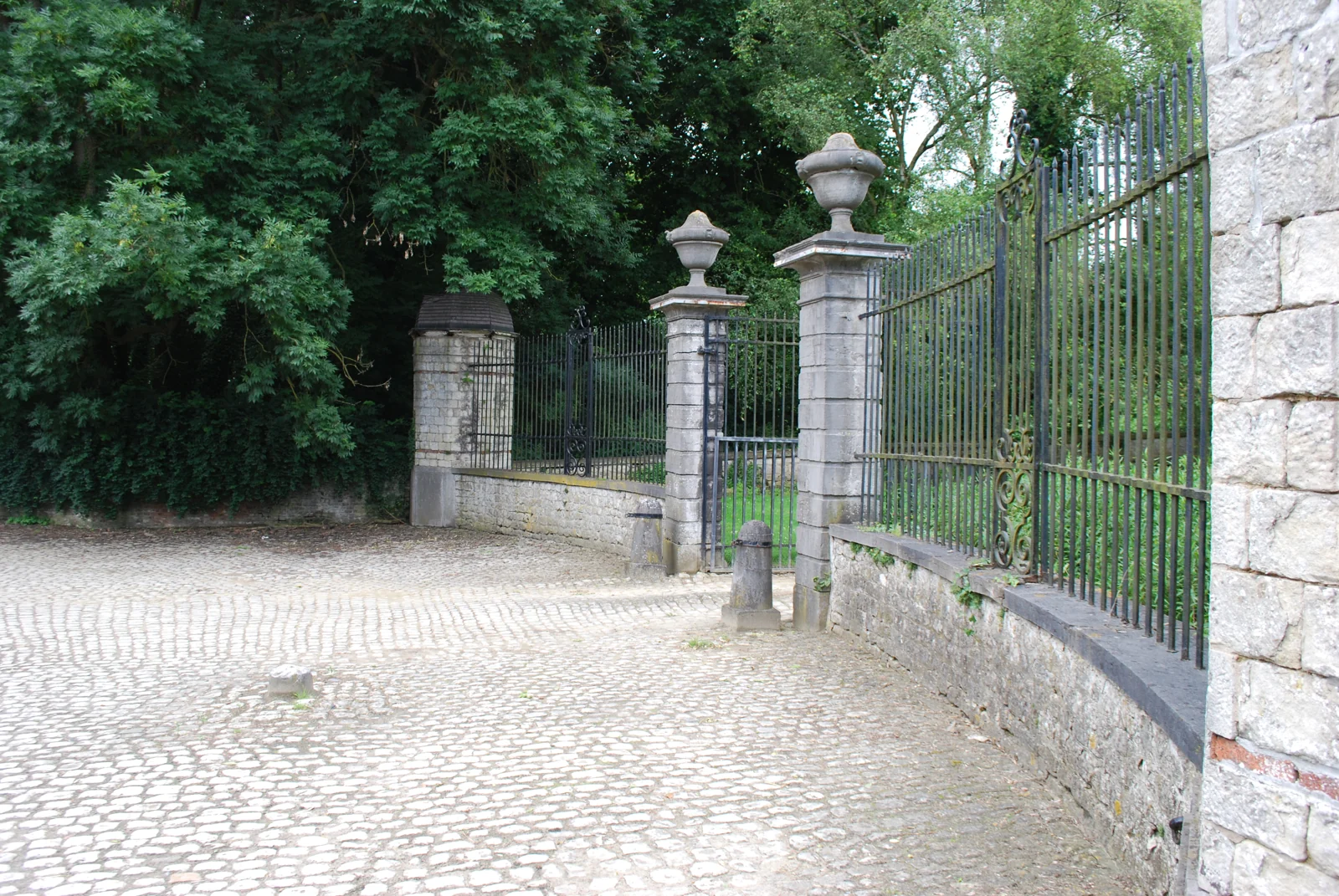
La photographie du château de Houtain-le-Val donne un visage au territoire. Elle ne représente pas le Double Escot et ne prouve pas une résidence des Wauthy dans ce château. De même, « Luthéal » demeure un nom d’exploitation à localiser précisément : montrer Rèves ne suffirait pas à en placer le bail sur une parcelle. Les images accompagnent la lecture ; elles ne remplacent pas les documents. R1 M3

6. Le maillon de 1658 : une question à garder ouverte
Pour poursuivre vers la famille actuelle, l’arbre passe par Pierre-Philippe Wauthy, puis Armand Wauthi, né vers 1658. C’est ici que la ligne doit devenir discontinue. La paternité attribuée à Pierre-Philippe est contestée dans un récit secondaire ; la minute notariale et le baptême d’Armand n’ont pas encore été retrouvés dans le dossier. Nous ne pouvons donc pas présenter ce lien biologique comme établi. R2
Le résumé conservé rapporte que deux femmes présentes lors de l’accouchement auraient déclaré que Marie Jacquet désignait son beau-frère comme père. Il ne permet pas d’identifier ce beau-frère, de désigner un autre père certain ou de conclure sur la paternité biologique. Il ne prouve pas davantage un mariage ou une annulation. Ces questions restent distinctes, même lorsqu’une tradition les réunit dans un seul récit. R2
La maternité de Marie Jacquet est retenue dans l’arbre et dans la confirmation familiale de Johnny ; le baptême reste nécessaire pour l’appuyer directement par un acte. Cette différence entre référence familiale et preuve archivistique doit rester lisible. Elle permet de respecter la mémoire transmise sans lui faire dire qu’un document a été obtenu alors qu’il manque encore. R2
La réserve porte sur un raccord précis. Elle n’efface ni l’existence des anciens Semal et Wauthy, ni l’intérêt de leurs fermes. Elle empêche en revanche de les qualifier, par ce chemin, d’ancêtres biologiques démontrés des descendants d’Armand. Le lien discontinu des deux arbres exprime exactement cette limite, avec des mots autant qu’avec un trait.
Arbre B · D’Armand à la famille Deman
Les traits continus suivent l’arbre de travail et ne valent pas acte consulté. Les dates anciennes sont celles du dossier, avec leurs réserves. Sources : R1–R3.
Union avec Marie Jacquet alléguée ; mariage non prouvé.
Chaque génération ci-dessous descend de la précédente selon la chaîne de travail ; actes à référencer.
- Armand Wauthi≈ 1658 – 1694C
- François Wauthiez1692 – 1779C
- François Joseph Wauthy1730 – 1814C
- Nicolas Joseph Wauthiez1762 – 1820C
- Armand Joseph Wauthy1805 – 1885C
- Hubert Joseph Wauthy1844 – 1902C
- Amand / Armand Joseph Wauthy1887 – 1955C
- Paula Wauthy1919 – 2008C
↓
↓
Leurs deux parents : Annie Lebon et Jean-Marie Michel Deman.
Lecture textuelle des relations
Pierre-Philippe ⇢ Armand : Paternité contestée · minute et baptême à retrouver. Marie Jacquet → Armand : Maternité retenue familialement · baptême à lire. Armand Wauthi → François Wauthiez → François Joseph Wauthy → Nicolas Joseph Wauthiez → Armand Joseph Wauthy → Hubert Joseph Wauthy → Amand / Armand Joseph Wauthy → Paula Wauthy ; Paula Wauthy + Joseph Lebon → Annie Lebon ; Annie Lebon + Jean-Marie Michel Deman → Carole, Johnny, Sandrine Deman.
7. Jusqu’à Paula, Annie et la famille Deman
À partir d’Armand, la chaîne du dossier familial suit François Wauthiez, François Joseph Wauthy, Nicolas Joseph Wauthiez, Armand Joseph Wauthy, Hubert Joseph Wauthy, puis Amand Joseph Wauthy. Elle conduit à Paula Wauthy, née en 1919 et morte en 2008. Chaque génération figure dans le second arbre ; les graphies Wauthi, Wauthiez et Wauthy sont conservées, sans transformer une ressemblance de nom en preuve de parenté. R2
Paula et Joseph Lebon sont les parents d’Annie Lebon. Annie et Jean-Marie Michel Deman sont les parents de Carole, Johnny et Sandrine. C’est donc par Annie et Paula que passe le parcours présenté ici. Jean-Marie garde sa place de conjoint et de père : ce schéma ne lui attribue pas une ascendance Semal. Aucune date de naissance de Joseph n’est nécessaire à ce récit, car les versions divergentes restent suivies dans le maître. R2 R3
Ce chemin donne aux lieux anciens une place dans une mémoire qui continue. Un enfant peut commencer par une photographie, un adulte par un nom connu, puis chacun remonter les générations. Les arbres ne ferment pas l’enquête : ils montrent aussi où retourner aux registres et aux contrats. La chaîne ancienne demeure une reconstitution de travail, avec des actes à référencer génération par génération.
Les prochaines pièces recherchées ont déjà une forme : le contrat de janvier 1597, les testaments de 1643 et 1645, les baux des censes, puis le baptême d’Armand et la minute rapportée de 1658. Le bail de Monstreux daté de 1676, repéré dans un inventaire, est postérieur aux premiers Semal ; il ne prouve pas leur tenure. Aucun fac-similé n’est fabriqué pour remplir la place de ces documents. R1 R2
Transmettre cette histoire, c’est offrir davantage qu’une suite de noms. C’est laisser des lieux où regarder, des personnes à distinguer et des sources que les générations suivantes pourront retrouver. Hulencourt, Monstreux, Pierpont, Houtain et Rèves deviennent ainsi des portes d’entrée : derrière chacune, une partie de l’histoire est lisible, et une autre attend encore son document.
B : appui secondaire · C : compilation et arbre · T : confirmation familiale. Aucun lien ancien n’est promu ici au niveau primaire A.