Le 11 juillet 1302, près de Courtrai, des milliers d’hommes s’affrontent sans pouvoir imaginer qu’un jour leurs lignées se retrouveraient dans un même arbre. L’histoire familiale Deman–Lebon–Wauthy nous conduit pourtant des deux côtés de cette bataille devenue célèbre sous le nom d’Éperons d’or.
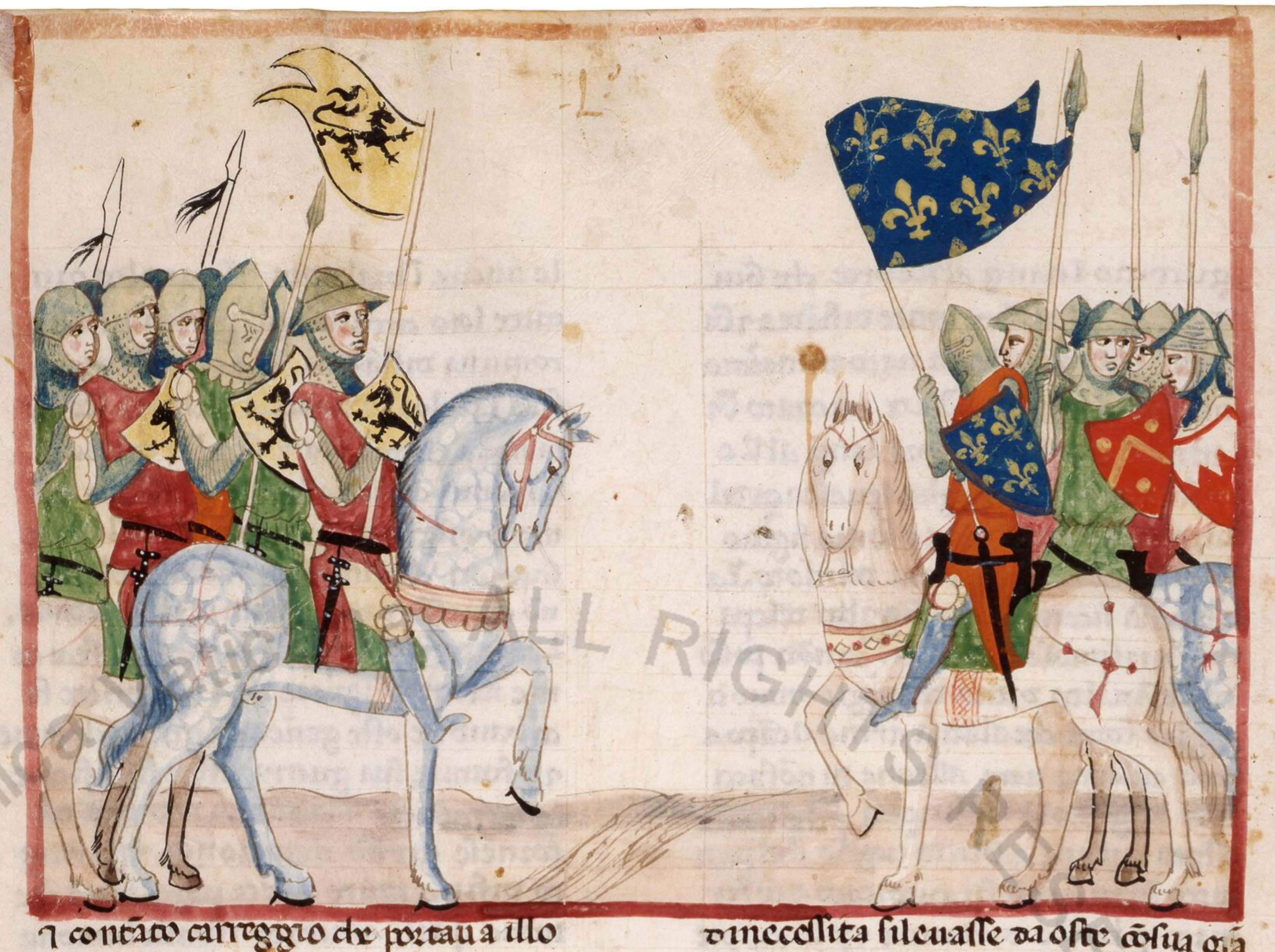
Une Flandre riche et sous tension
Au début du XIVe siècle, Bruges, Gand et Ypres comptent parmi les grands centres marchands et textiles d’Europe. Le comte Gui de Dampierre s’oppose au roi de France Philippe IV le Bel. En 1300, le comte et plusieurs membres de sa famille sont emprisonnés ; la Flandre passe sous administration française et la résistance s’organise.
Il serait trompeur d’en faire une guerre nationale au sens moderne. Les fidélités sont féodales, urbaines, économiques et familiales. Après les Matines de Bruges de mai 1302, la confrontation devient inévitable.
Robert II d’Artois dans le camp français
Philippe le Bel confie son armée à Robert II, comte d’Artois. Dans l’arbre familial, Robert descend de Louis VIII, Blanche de Castille, des ducs de Brabant et des Hohenstaufen. Il appartient donc à la route qui remonte notamment jusqu’à Frédéric Barberousse.
Le choc du 11 juillet
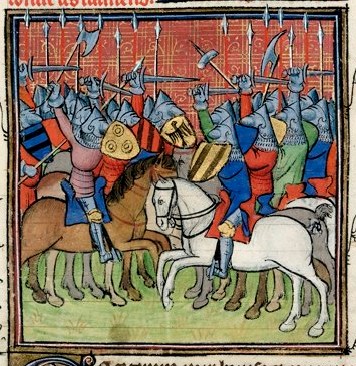
Sur le terrain de Groeninghe, ruisseaux, fossés et sols humides gênent la cavalerie lourde. Face aux chevaliers, l’infanterie flamande combat en formations serrées avec des armes d’hast et des goedendags. L’attaque française perd son élan ; la mêlée devient meurtrière et les formations flamandes tiennent.
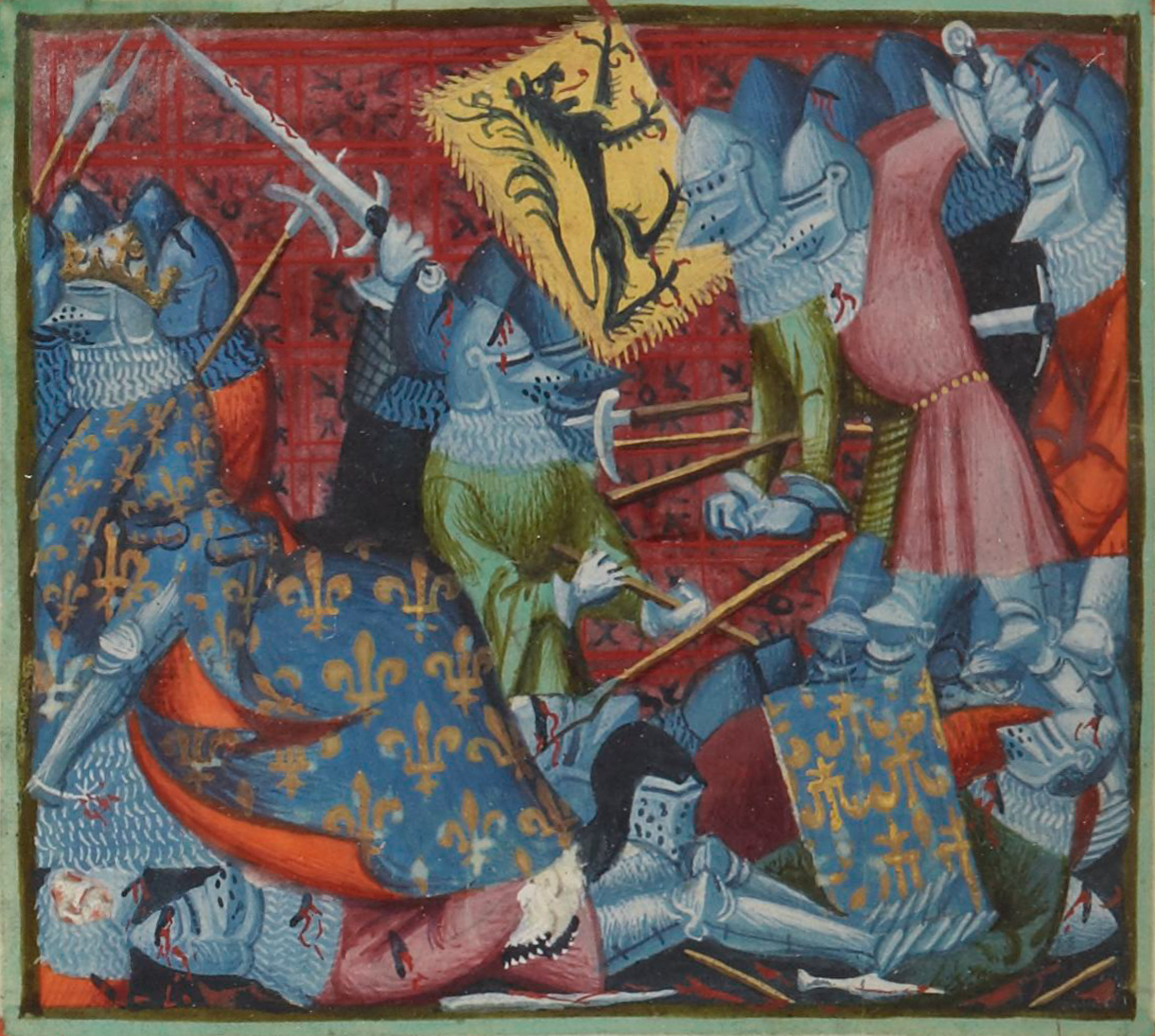
Robert II d’Artois meurt au combat le 11 juillet 1302. Une grande partie de la noblesse chevaleresque engagée tombe avec lui.
Dans l’autre camp : les Namur
Gui de Namur, fils de Gui de Dampierre, est l’un des principaux chefs du camp flamand victorieux. Son frère Jean Ier de Namur est un ancêtre direct dans l’arbre familial. La Biographie nationale belge le décrit comme engagé dans le soulèvement et combattant à Courtrai auprès de son frère. Des discussions subsistent sur le détail de l’arrivée des contingents ; elles ne changent pas le rôle central de la maison de Namur dans le camp opposé à Robert.
1309 : les ennemis deviennent une famille
Robert II avait un fils, Philippe d’Artois. La fille de Philippe, Marie d’Artois, épouse en 1309 Jean Ier de Namur. Sept ans après la bataille, la petite-fille du commandant français mort à Courtrai rejoint donc la maison qui combattait dans le camp adverse.
De leur union descend notamment Guillaume Ier de Namur. Le chemin retenu dans l’arbre poursuit sa route vers Jean III de Namur, Jean de Namur dit de Trivières, les La Hamaide, Jacquet et Wauthy, puis vers Paula Wauthy, Annie Lebon et les Deman.
Robert II d’Artois → Philippe d’Artois → Marie d’Artois × Jean Ier de Namur → Guillaume Ier de Namur → Jean III → Jean de Namur dit de Trivières → La Hamaide → Jacquet → Wauthy → Paula Wauthy → Annie Lebon → Carole, Johnny et Sandrine Deman.
Pourquoi « les Éperons d’or » ?
Après la bataille, les vainqueurs récupèrent les équipements des chevaliers tombés. La tradition rapporte que leurs éperons, symboles de la condition chevaleresque, furent exposés dans l’église Notre-Dame de Courtrai. Le nom de Guldensporenslag — bataille des Éperons d’or — s’est imposé dans la mémoire.
Une famille des deux côtés de l’Histoire
Cette généalogie rappelle que les familles pouvaient se combattre, négocier, changer d’alliance puis unir leurs enfants. Robert II meurt dans le camp français en 1302 ; en 1309, sa petite-fille épouse Jean Ier de Namur. Les vainqueurs et les vaincus finissent ainsi par avoir les mêmes descendants.