Le 25 octobre 1415, dans un champ détrempé du Pas-de-Calais, l’armée du roi Henri V d’Angleterre inflige à la chevalerie française l’un des désastres les plus célèbres de la guerre de Cent Ans. Parmi les morts apparaît un nom qui appartient aussi à notre histoire familiale : La Hamaide.
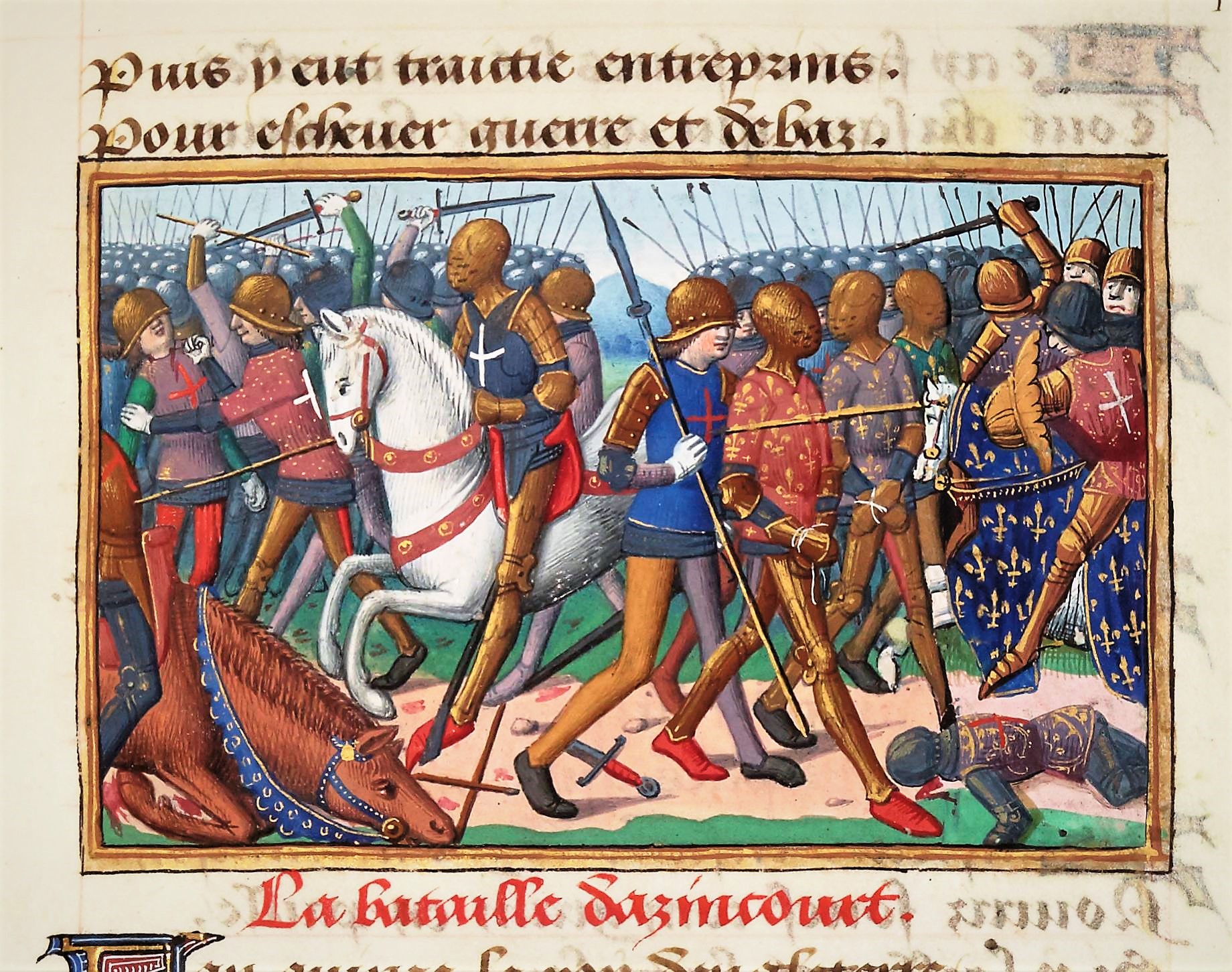
Jean IV, chevalier du Hainaut
Jean IV de La Hamaide, seigneur de La Hamaide, de Condé et de Renaix, est chevalier, conseiller et chambellan du duc de Bourgogne. Les listes médiévales des morts, étudiées par les historiens Rémy Ambühl et Anne Curry, le placent parmi « la fleur des seigneurs du comté de Hainaut » tombés à Azincourt. Une notice officielle du patrimoine français rappelle également qu’il meurt dans cette bataille.
Thierri, l’autre destin de La Hamaide
Les généalogies de la maison citent aussi Thierri, bâtard de La Hamaide, né vers 1383, époux de Marie de Bassy et associé à la branche de Chéreng. Elles le donnent mort à Azincourt le même 25 octobre 1415. Cette information demeure moins solidement établie que celle concernant Jean IV : elle repose aujourd’hui sur des compilations généalogiques et une histoire locale de Chéreng, sans acte original retrouvé dans notre dossier.
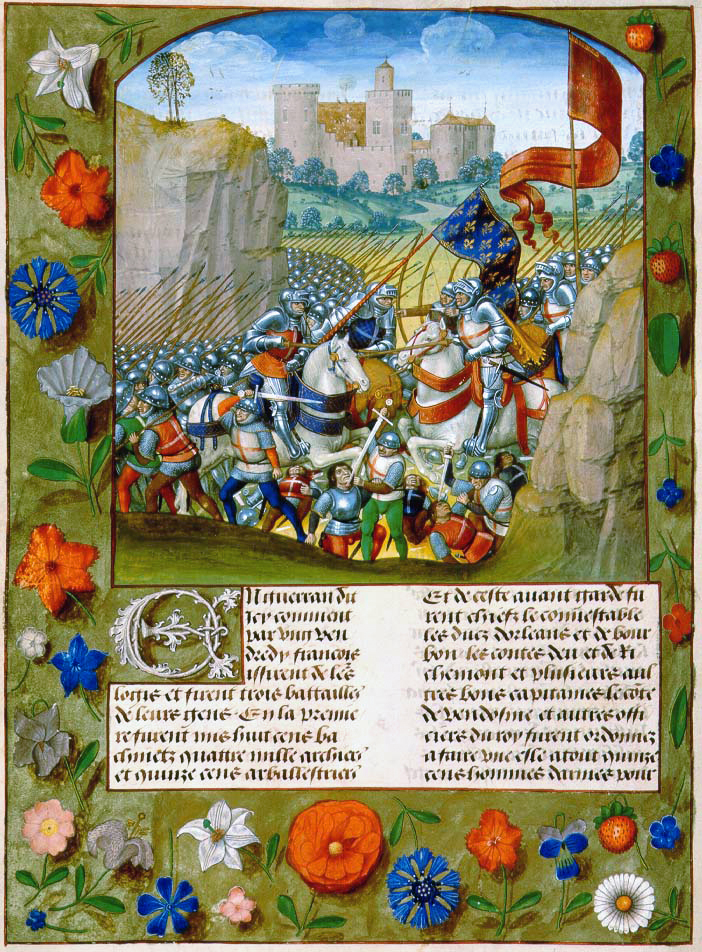
La boue, les flèches et la mêlée
Après plusieurs jours de pluie, les hommes d’armes français avancent sur un terrain lourd et resserré entre deux bois. Les archers anglais harcèlent leur progression ; les rangs se compriment et la bataille se transforme en mêlée. Nous savons que Jean IV y périt, mais aucune source retrouvée ne permet de raconter son dernier instant ni celui de Thierri. Leur prêter des paroles ou une mort précise serait inventer ce que les documents taisent.
Deux hommes, une mémoire
Même sans forcer leur filiation, l’image reste puissante : deux hommes de La Hamaide sont associés au même jour tragique. Jean IV appartient à la branche aînée, tandis que Thierri ouvre, selon la reconstruction conservée, une branche bâtarde vers Chéreng. Azincourt ne nous livre pas tous ses secrets, mais il laisse dans l’histoire de La Hamaide une blessure que les siècles n’ont pas effacée.