Avant d’être le nom d’une victime dans un journal, Aimé Deman fut un fils de Mannekensvere, un époux, un père et un homme photographié parmi les siens. Les archives familiales lui rendent aujourd’hui un visage ; trois coupures néerlandaises permettent de raconter sa fin tragique sans transformer les blancs du dossier en certitudes.
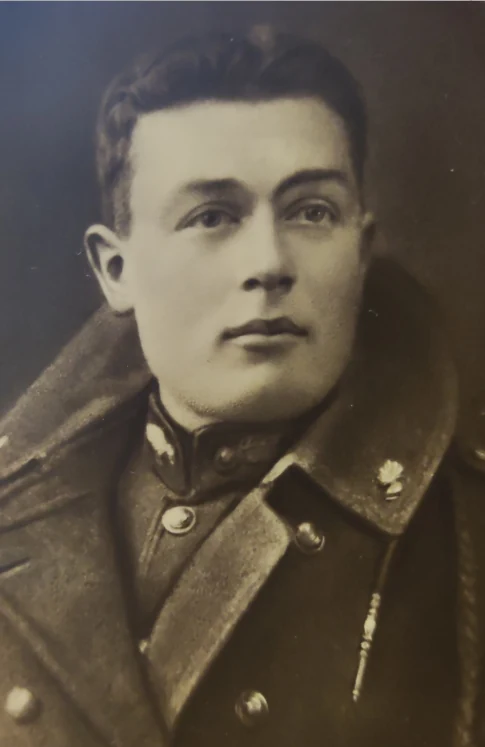
Un homme de Mannekensvere
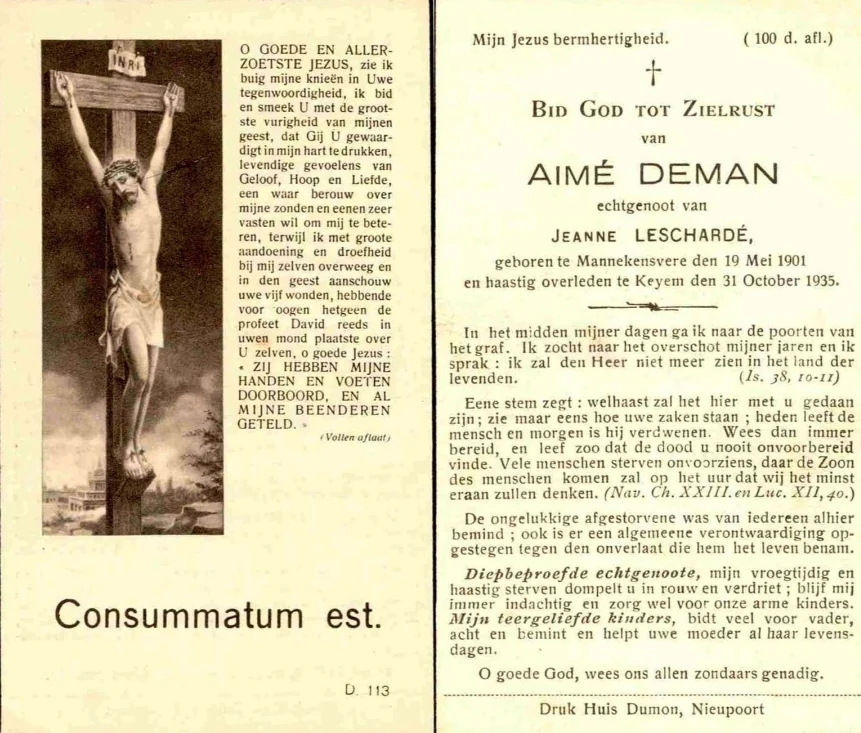
La carte mortuaire donne une première assise solide : Aimé Constant Joannes Deman naît à Mannekensvere le 19 mai 1901. Les compilations familiales le placent parmi les enfants de Theophiel Florimond Deman et d’Urbanie Maria Baeckelandt. Elles situent son mariage avec Jeanne Hortensia Lexhardé, nommée Jeanne Leschardé dans les documents flamands, le 15 août 1926 à Nieuwpoort. Cette date de mariage reste à confirmer par l’acte.
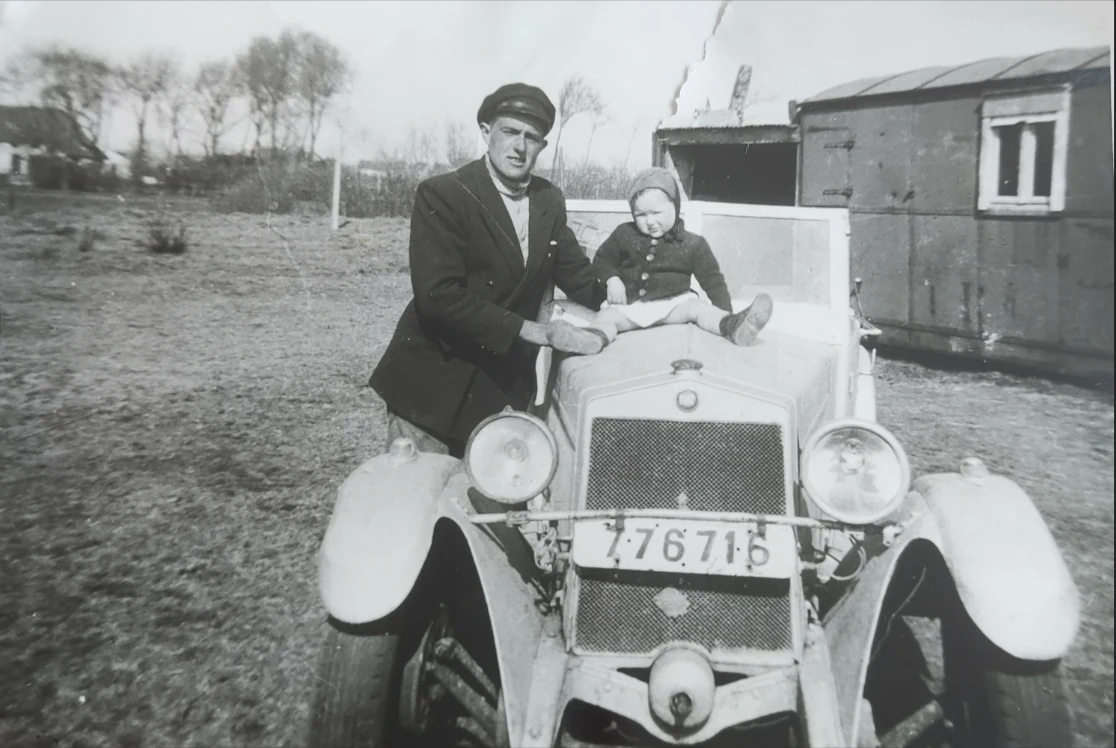
Une seconde photographie montre Aimé auprès d’un enfant assis sur le capot d’une automobile. L’enfant, le véhicule et la date ne sont pas identifiés. Cette image dit néanmoins quelque chose que les comptes rendus judiciaires ne peuvent pas dire : Aimé eut une vie familiale avant que la violence ne la coupe en deux.
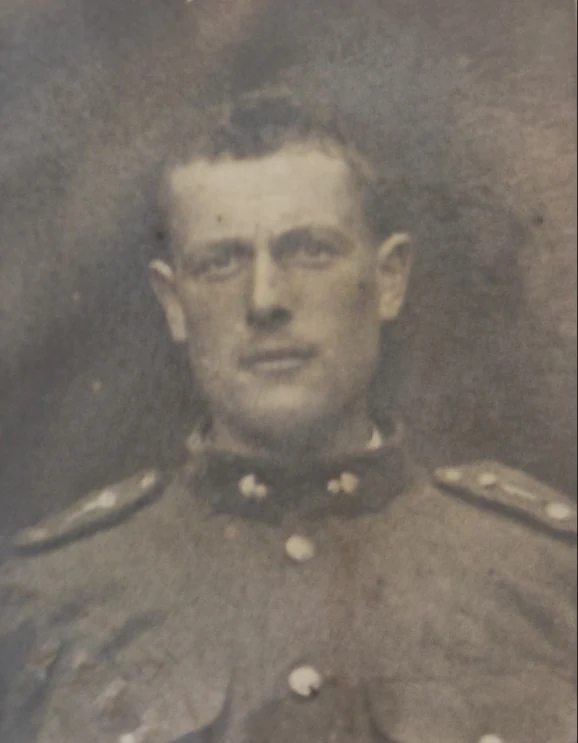
Aux limites de Keiem et de Leke
Keiem et Leke sont deux villages agricoles voisins au nord de Diksmuide. Le territoire passe des polders bas, plats et parcourus de fossés vers des terres un peu plus hautes. Ce paysage aide à comprendre la ronde nocturne décrite par la presse, sans permettre de localiser aujourd’hui avec certitude l’endroit exact du drame.
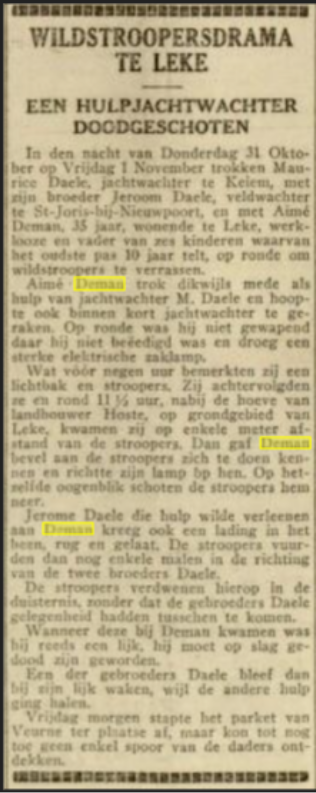
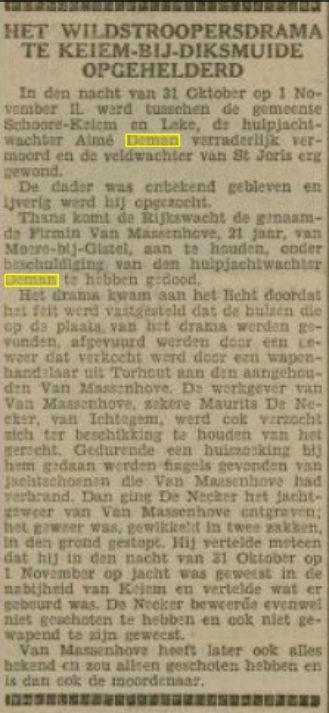
Dans la nuit du jeudi 31 octobre au vendredi 1er novembre 1935, le garde-chasse Maus Daele, son frère Jeroom Daele, garde champêtre à Sint-Joris près de Nieuwpoort, et Aimé effectuent une ronde destinée à surprendre des braconniers. La coupure présente Aimé comme auxiliaire garde-chasse, domicilié à Leke, mais aussi comme sans emploi. Son activité habituelle précise n’est donc pas encore établie.
Vers 23 h 30, près d’une ferme attribuée dans l’article au cultivateur Hoste, les trois hommes distinguent une faible lumière. Aimé s’avance. Il porte une forte lampe électrique mais, selon le récit publié, il n’est pas armé. Des coups de feu partent presque aussitôt. Aimé est atteint mortellement. Jeroom Daele, qui tente de lui porter secours, reçoit une décharge à la jambe, au dos et au visage. Les braconniers tirent encore vers les frères Daele avant de disparaître dans l’obscurité.
L’enquête et les condamnations
Une seconde coupure annonce que l’affaire est élucidée. Elle nomme Firmin Van Massenhove, vingt et un ans, de Moere près de Gistel, et Maurits Denecker, vingt-trois ans, d’Ichtegem. Selon ce compte rendu, les deux hommes reconnaissent avoir braconné cette nuit-là. Van Massenhove admet le tir mortel et Denecker est associé au tir qui blessa Jeroom Daele. Il s’agit d’aveux rapportés par le journal : seul le dossier d’instruction pourra en donner la formulation judiciaire exacte.
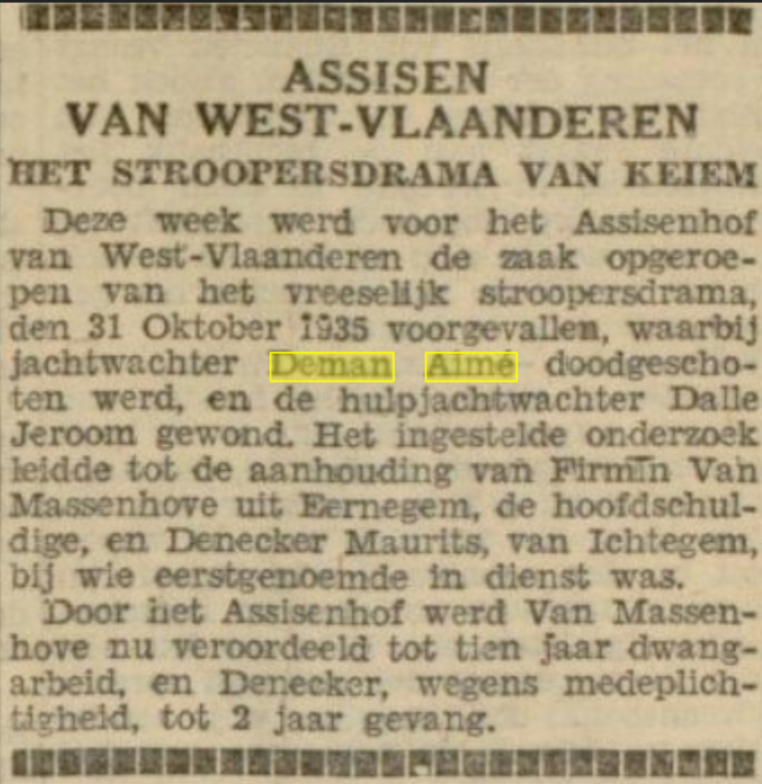
La troisième coupure, consacrée aux assises de Flandre occidentale, rapporte le verdict : dix ans de travaux forcés pour Firmin Van Massenhove et deux ans de prison pour Maurits Denecker, condamné comme complice. Le titre du journal et la date exacte de l’audience ne sont pas visibles sur la capture conservée.
La famille derrière le fait divers
La carte mortuaire fixe la mort d’Aimé à Keiem, le 31 octobre 1935. Elle permet de corriger l’âge de trente-cinq ans donné par la presse : né le 19 mai 1901, Aimé avait trente-quatre ans. La première coupure annonce aussi six enfants. Seules Odette, Georgette et Anita sont actuellement nommées dans le dossier, tandis que d’autres compilations donnent encore d’autres totaux. Aucun nombre définitif ne peut être retenu sans les actes et registres de population.
Jeanne se retrouve veuve à vingt-huit ans. Une tradition familiale affirme qu’elle aurait écrit à la reine pour demander la grâce du meurtrier de son mari. Aucun courrier n’est actuellement conservé : cette histoire demeure un témoignage à rechercher, non un fait démontré.
Aimé Deman n’est donc pas seulement l’homme d’une nuit tragique. Les portraits, la carte mortuaire et la presse font apparaître un fils de Mannekensvere, un époux, un père, un compagnon de ronde et une victime dont la mort bouleversa un foyer. Les archives manquantes pourront encore préciser l’affaire. Elles ne remplaceront jamais l’homme, mais elles peuvent empêcher que son histoire soit réduite à une légende ou à quelques lignes mal lues.